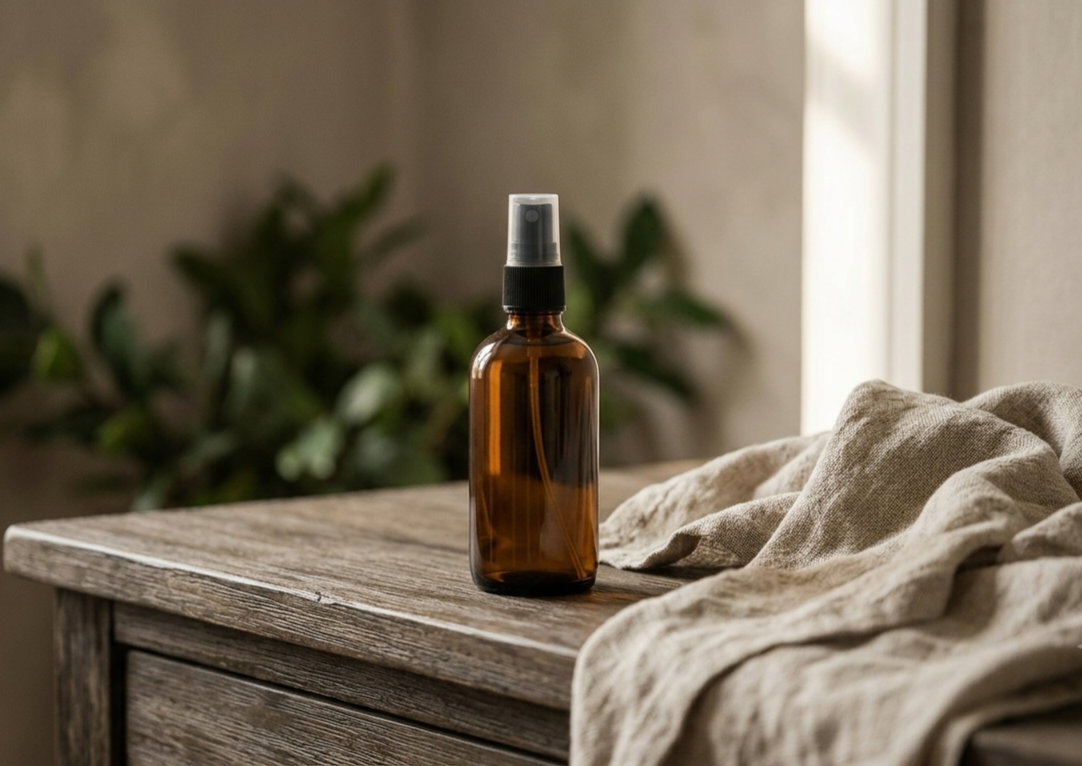
A room mist is simpler than a candle — no flame, no wick, no waiting — but simpler isn't the same as "spray it anywhere and it'll be fine."
The basics
Hold the bottle about 30 to 40cm from what you're spraying — close enough to land properly, far enough that it doesn't arrive as a wet patch. One or two pumps is usually plenty for an average room. More isn't more, it just means the top note hits harder and fades faster.
Keep the bottle itself out of direct sun and away from heat. Sunlight breaks fragrance oil down over time, which is part of why ours comes in amber glass rather than clear — amber blocks a lot more UV than clear glass does.
Surfaces worth being careful with
Test on fabric before you commit, especially anything pale or delicate. Alcohol-based mists can occasionally affect certain dyes, and it's much easier to test an inside seam than to explain a mark on the good cushions afterwards.
Avoid spraying directly onto polished or oiled wood. It's the alcohol, not the fragrance, that can be unkind to a finish — a light mist into the air just above the surface does the same job without the risk.
Matching scent to room
- Sunday Morning — kitchens, living areas, anywhere that could use something warm baking through the room
- First Light — a study, a hallway, anywhere that benefits from feeling a bit more grounded
- Quiet Evening — bathrooms, bedrooms, last thing at night
- Clean Slate — a workspace, an entryway, anywhere that needs to feel reset rather than "scented"
None of this is strict. Plenty of people spray Quiet Evening at 10am because it's just the one they like. That's allowed too.