Paraffin is a by-product of petroleum refining. That's not a dramatic statement, just a fact, and it's a big part of why most mass-market candles are cheap — the raw material is essentially leftover.
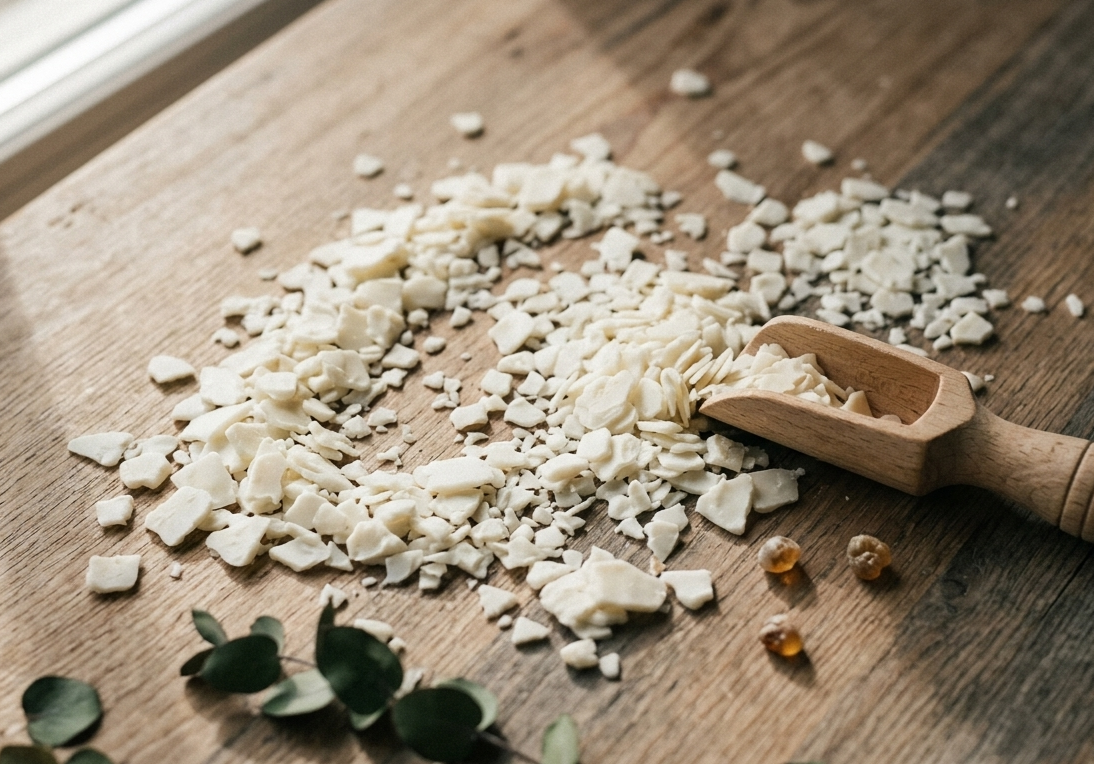
Soy wax comes from soybean oil, hydrogenated into a solid and poured at a lower temperature. It also holds fragrance oil differently to paraffin: more of it stays suspended in the wax rather than burning off in the first ten minutes of a burn.
What that means when you light one
A soy candle typically burns cooler and slower than a paraffin candle of the same size. Less heat means less wax wasted as vapour before it's had the chance to release any scent, which is part of why a well-made soy candle can outlast a paraffin one of equal weight.
It also tends to mean less soot. Paraffin candles are usually the ones that leave a faint black smudge on the inside of the jar over time. Soy burns cleaner — not smokeless, nothing with an open flame is smokeless — but noticeably better.
The less romantic reason
It's also just easier to live with. A wax spill on the counter wipes up with warm water and a bit of dish soap. Try that with paraffin and you'll be scraping at it for a while.
We use soy because it's the better material, not because it sounds nice on a label. It costs more per batch to make. We think it's worth it.